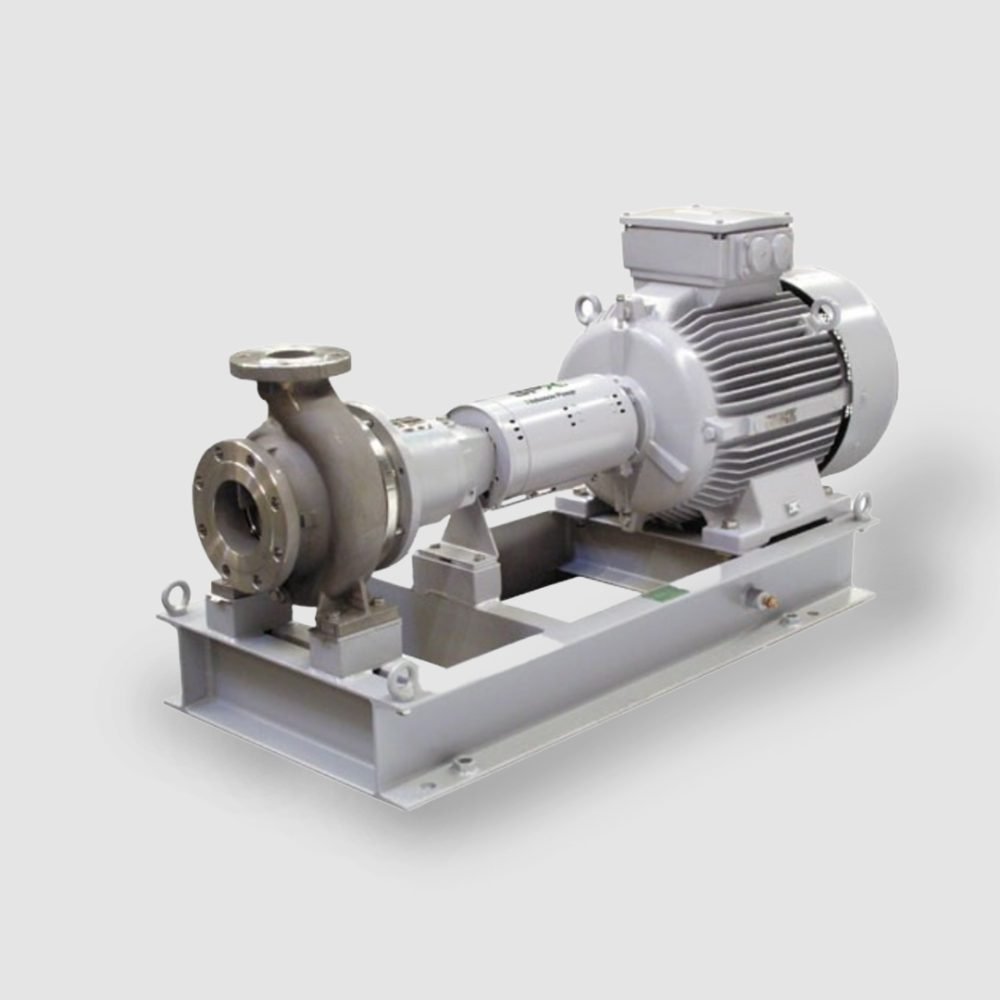
Positive displacement pumps

Positive displacement pumps move fluid by repeatedly expanding and contracting a closed pump chamber, with each cycle moving a fixed volume virtually independent of back pressure. They are suitable for high viscosities, particulate media, and precise dosing, and are widely used in the food, chemical, and water treatment industries. We supply, install, and overhaul positive displacement pumps, tailored to your process regardless of brand.

Positive displacement pumps for every process

We supply, install, and maintain all types of positive displacement pumps. Below you will find our range of positive displacement pumps from Seepex, Johnson Pump, DEPA, Waukesha, MasoSine, and Yamada, among others.

One partner, from selection to maintenance.

Complete peace of mind

Select, deliver, install, and maintain. We handle the entire process, including 24/7 breakdown service. 

Specialist advice

Our internal team knows every pump type and provides assistance from the very first question. 

Insight via our Service Center

Documentation, maintenance history, and status of your pump park always digitally accessible. 

Types of positive displacement pumps

Oscillating (back and forth) or rotating (turning)

Positive displacement pumps can be divided into two groups. In oscillating positive displacement pumps, a piston, plunger, or diaphragm moves back and forth. In rotary positive displacement pumps, a rotating rotor, lobe, screw, or roller displaces the fluid. Below you will find the main types of positive displacement pumps.

01

Piston and plunger pumps

They operate with a reciprocating piston or plunger that moves the fluid under high pressure. They are used where high pressures are required in combination with a relatively low flow rate, for example when dosing chemicals, injecting additives, or pumping cement pastes. Pressures of up to 200 bar and higher are possible. 

02

Diaphragm pumps

They use a flexible membrane that moves back and forth to displace fluid. The major advantage is that the medium remains completely separated from the drive, eliminating leakage. This makes diaphragm pumps ideal for corrosive, toxic, or sensitive fluids. They are available as air-driven (AODD) or mechanically driven variants.

03

Eccentric worm pumps

They consist of a spiral rotor rotating within an elastomer stator. The fluid is carried in enclosed chambers from the suction to the discharge side. Screw pumps deliver a very uniform, pulsation-free flow and are suitable for viscous products and slurries containing solid particles. They are widely used in the food industry, manure processing, and sludge treatment.

04

Lobe pumps

They operate with two or more lobes that rotate in opposite directions and transport the fluid along the inner wall of the pump housing. They offer a hygienic design with smooth, easy-to-clean surfaces, making them the standard in the food, dairy, and pharmaceutical industries. The low shear stress makes them suitable for shear-sensitive products such as cream, yogurt, and sauces.

05

Screw spindle pumps

consist of two or three interlocking screws that displace the fluid axially. They deliver a very uniform, pulsation-free flow at high pressures and are suitable for lubricating fluids with viscosities up to 100,000 mPa·s. Typical applications include lubricating oil, hydraulic fluids, and fuel.

06

Peristaltic pumps

They operate by compressing a flexible hose with rollers or shoes. The fluid only comes into contact with the inside of the hose, thus eliminating cross-contamination. Peristaltic pumps are self-priming, can run dry, and are easy to maintain; only the hose is a wear part. They are widely used for abrasive, chemically aggressive, and sterile fluids.

07

Sinus pumps

They operate with a single rotor forming four uniform chambers. They pump with low shear, virtually without pulsation, and with powerful suction. Sinus pumps are suitable for viscous, delicate, and particle-rich liquids in hygienic processes, ranging from cheese whey and fruit concentrates to pharmaceutical suspensions and cosmetic emulsions.

08

Tumbler pumps

They are compact positive displacement pumps for viscous and highly viscous media in the chemical, pharmaceutical, cosmetics, and food industries. They are quick and easy to clean, suitable for CIP and SIP, and can optionally be heated or cooled. The seals are easy to replace on-site.

09

Dosing pumps

They are specially designed positive displacement pumps for the precise administration of small, exactly dosed quantities of liquid. They often operate with a diaphragm or piston and are controlled by a frequency converter or stroke adjustment. Typical applications include water treatment, chemical dosing, and pharmaceutical processes.

How does a positive displacement pump work?

A positive displacement pump enlarges the pump chamber on the suction side so that fluid is drawn in. Subsequently, the chamber is reduced in size and the fluid is pushed to the discharge side. The flow rate depends almost linearly on the rotational speed and hardly at all on the back pressure. This is called a steep pump characteristic. A centrifugal pump, on the other hand, delivers less as the back pressure increases.

Because a positive displacement pump continues to pump, it builds up increasing pressure against a closed valve. Overpressure protection is therefore always necessary. You can read more about this in our article. How does a positive displacement pump work? and about the difference between a positive displacement pump and a centrifugal pump.

Which positive displacement pump suits your medium?

Medium or applicationSuitable positive displacement pumps
High-viscosity liquidsWorm pump, lobe pump, screw spindle pump, sinusoidal pump, tumbling ring pump
Solid particles and abrasive mediaWorm pump, diaphragm pump, peristaltic pump
Aggressive chemicalsDiaphragm pump, peristaltic pump
Fragile, shear-sensitive productsLobe pump, sinus pump, worm pump
Hygienic applications (food and pharmaceuticals)Lobe pump, sinus pump, tumbling ring pump, hygienic worm pump
Accurate dosingDosing pump
High pressure at low flow ratePlunger pump, screw spindle pump

The choice depends not only on the medium, but also on the temperature, flow rate, pressure, and cleaning method. We provide advice based on the complete picture.

Frequently asked questions about positive displacement pumps

A positive displacement pump is a pump that moves fluid by expanding and contracting a closed pump chamber. With each stroke or revolution, it pumps a fixed volume, virtually independent of the back pressure.

A centrifugal pump speeds the fluid using a rotating impeller. The flow rate decreases as the back pressure increases. A positive displacement pump delivers a virtually constant flow rate, even with fluctuating back pressure and viscous fluids.

There are oscillating positive displacement pumps, such as piston, plunger, and diaphragm pumps, and rotary positive displacement pumps, such as worm, lobe, screw spindle, peristaltic, and sine pumps.

Most positive displacement pumps are self-priming. The extent to which a pump can draw varies by type and model.

A positive displacement pump continues to move fluid, even if the discharge line is blocked. The pressure then builds up until the pump, the pipe, or the seal is damaged. An overpressure protection device prevents this.

Everything about positive displacement pumps

Let your pump be selected

Unsure which pump is right for your process? Our engineers have years of experience with various pump brands and types and find the right solution for every process. We are happy to assist you. 

Fill out our contact form and one of our specialists will contact you as soon as possible. 

Scroll to Top